↑↑↑ video here ↑↑↑
08_2026
+++++++++++++++++++++++++++++++++++++++++++++++++++
Madonna
Stuart Price
Marco Parisi
Giampaolo Parisi
total remix: Olivier Pasquet
video: Olivier Pasquet
Everything is a song by Madonna from her studio album Confessions II. Co-written and produced with Stuart Price and the Italian duo Parisi, the track stands as a dark techno and stuttering house anthem—heavy bassline, thumping groove, EDM elements woven throughout. It builds with poignant urgency, creating an atmospheric, club-ready soundscape that echoes sonic nods to Madonna’s classic 1990s singles like Justify My Love and Bedtime Story, as well as the elevated EDM sensibility of her 2012 album MDNA, mixed by my friend Philippe Weiss.
This new work exists in direct conversation with Confessions on a Dance Floor, the seminal 2005 album also produced by Stuart Price and started with Mirwais; an album for which I created a remix. When asked by many to compose a response to this material two decades later, I approached it with real pleasure. Everything emerged naturally and obviously in the composition. To me, this is a fusion of the studio works I created in Paris at FCom by then, and the subsequent research I conducted with more recent abstract works.
But this experience has raised questions I cannot yet answer: Is the emotional situation I am navigating in summer 2026 catalysing a radical change in my work? Will I become more directly productive, less conceptual, less caught in the weeds of coding and technical abstraction, now that AI and my artistic language are more refined? I feel an intrinsic, logical need pulling in this direction, yet I cannot determine if this is genuine transformation or merely an impression. Or will I rather continue to dig deeper into research and experimentation for the sake of imaginative exploration itself?
I presented these questions during my remarks at NII Tokyo in June 2026. It is not new that the world shares an interest in experimentation and abstraction. This impulse defined the 20th century. But perhaps today, we have moved a step further. We are now equally interested in meanings and emotions. I cannot say how much commercial influence and pressure shape this shift, but it is undeniably real. We are witnessing a synthesis: 19th-century post-romanticism merging with twentieth-century abstraction and transposed with maturity into the second quarter of the 21st century.
Applied to music, this becomes unavoidable: commercial music is culturally so rich, so cultured, that it has penetrated contemporary classical composition. Those names, those boxes we use, hardly mattered, and they matter less and less.
I return to these questions, perhaps obsessively and surely only for myself, because the subject is part of my life and passions. I come from a class-struggle family; it is deeply societal and political. Coming from academic classical music, the imperative to connect art to contemporary society is fundamental to my practice. The musical part belongs to the technical part of a piece of music. I also often say that a masterpiece transcends its period. This remix, for me, is an opportunity to merge both aspects of my artistic identity. Though in truth, there is nothing to merge, as it is simply music.
During my early years at Ircam, many scholar composers naively claimed that making a commercial track was simple, straightforward work. Those voices have largely disappeared now, though it took decades, in France and Germany particularly, for institutions to accept that no genuine social or musical border exists between “pop” and “non-pop.” These distinctions are culturally local, artificial, and scholarly constructs designed to separate cultures and assert power hierarchies. They are ridiculous, finally and happily in disappearance today.
From my practice experience, music achieves richness when one engages with it fully: examining its tools, influences, social contexts, emotional registers, and physical or cerebral dimensions. None of these qualities depends on whether the work is commercial (designed to be liked and sold) or belongs to a niche audience. That binary is false. Both require equal craft, imagination, and cultural knowledge. And it would not matter if it were not the case either.
One can approach these questions from another angle. For instance, I had always considered Karlheinz Stockhausen’s Mittwoch aus Licht to be in poor taste. Like many others, I have been profoundly influenced by Stockhausen, particularly by the works he composed during the first few decades of his career. I found his music less compelling when he began to embrace more explicitly spiritual concerns, as in Sirius. This was largely because I viewed music as purely organised sound and paid little attention to everything surrounding it.
In a way, I mirror Stockhausen’s own trajectory: he initially focused on music as such, then gradually opened it up to a more spiritual dimension. Recently, I was invited by my Parisian friends from Le Balcon to see Mittwoch aus Licht at the Berlin State Opera, in a production directed by Markus Selg and Susanne Kennedy. I expected not to enjoy it, yet I found myself loving it. The interpretation, the video and set design undoubtedly contributed to that response, but they were not the only reasons.
I think my own tastes—and perhaps the world itself—have changed since the piece was first premiered. I would have hated it a decade ago. Without necessarily realising it, Stockhausen was also a pioneer in this regard. Not because he pioneered spirituality in music, but because he explored the relationship one has with what I like to call kitsch: something so immediately powerful that it reaches the emotions directly, often producing an overwhelming sense of wonder. I think “electronic music” has been around long enough to have matured into a cultured form capable of engaging with more than sound alone. This is not entirely new, but it may be more evident today, as the widespread reach of music has amplified its power to address and move large numbers of people. This is good…
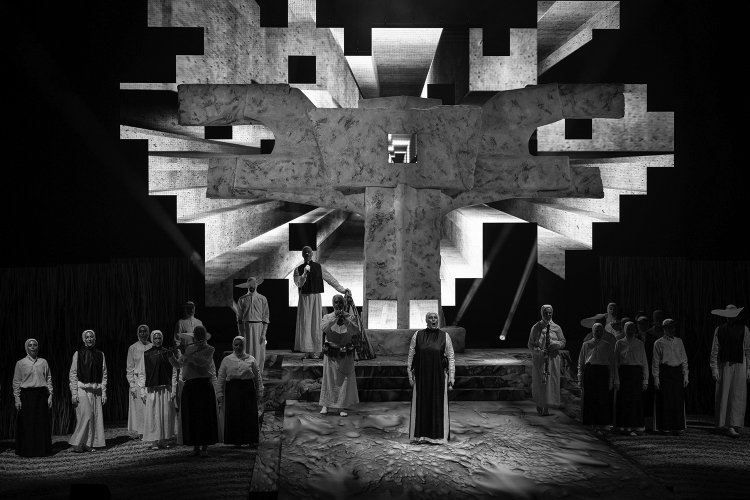
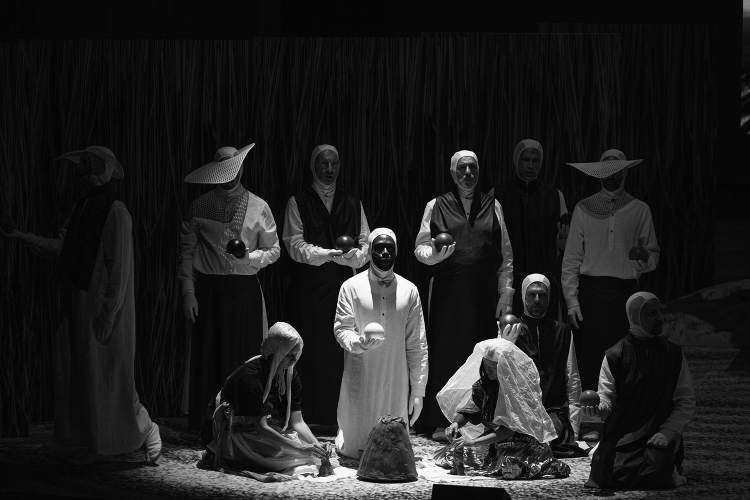
Mittwochs Stockhausen @ Julian Roeder _2026
Madonna, Stuart Price, and Mirwais created albums that have become generational touchstones. We see their influence everywhere: within some of those artists with whom I have worked; FKA Twigs, Arca, Kelela, Slayyyter, Grimes, and Injury Reserve and, from a production perspective, in artists like Clipping., Actress and Loraine James, some of whom I have worked alongside. Their commitment to experimentation while remaining engaged with “pop” idiom has shown multiple generations that these territories are not only compatible; they are essential to one another.
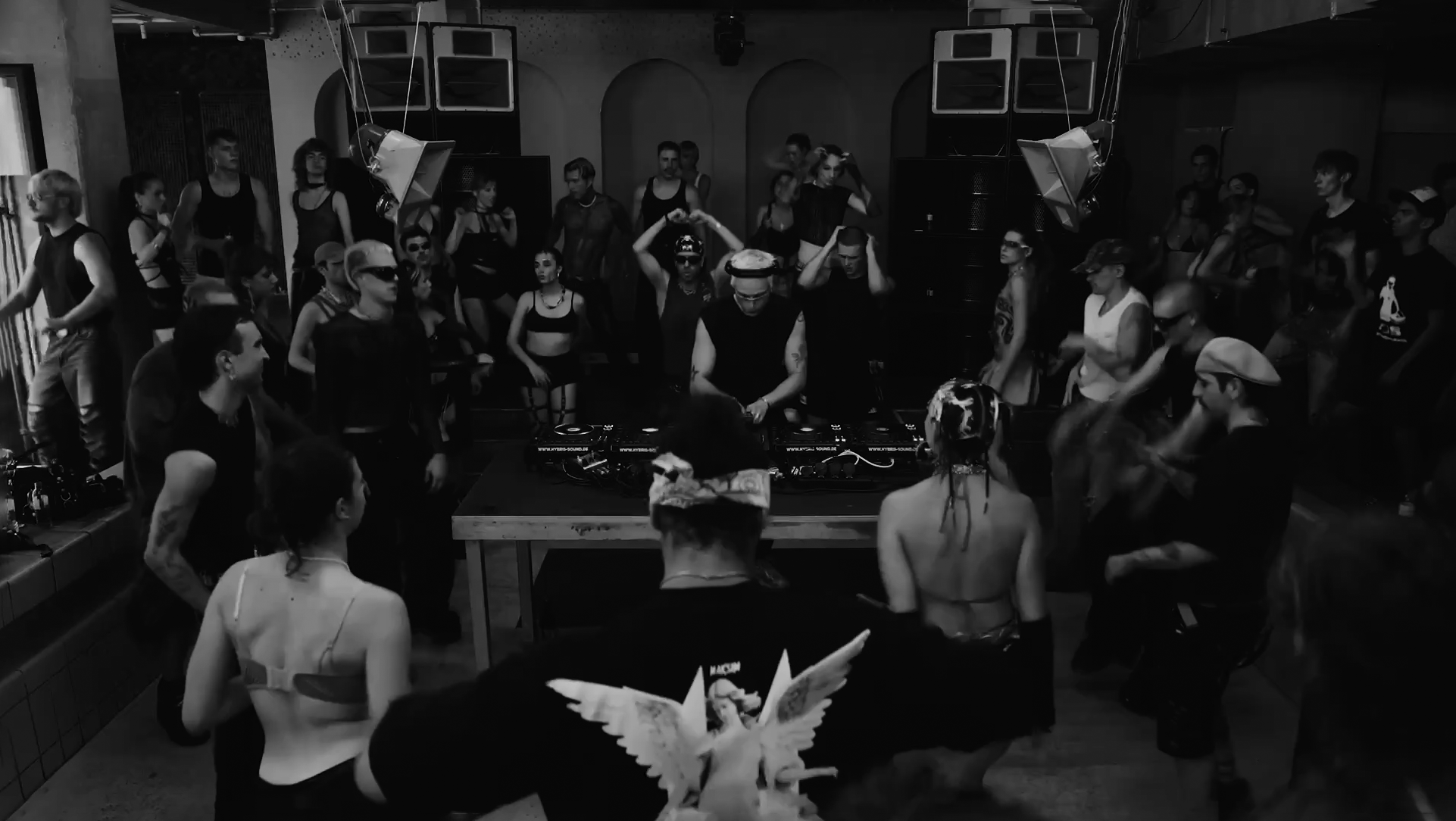
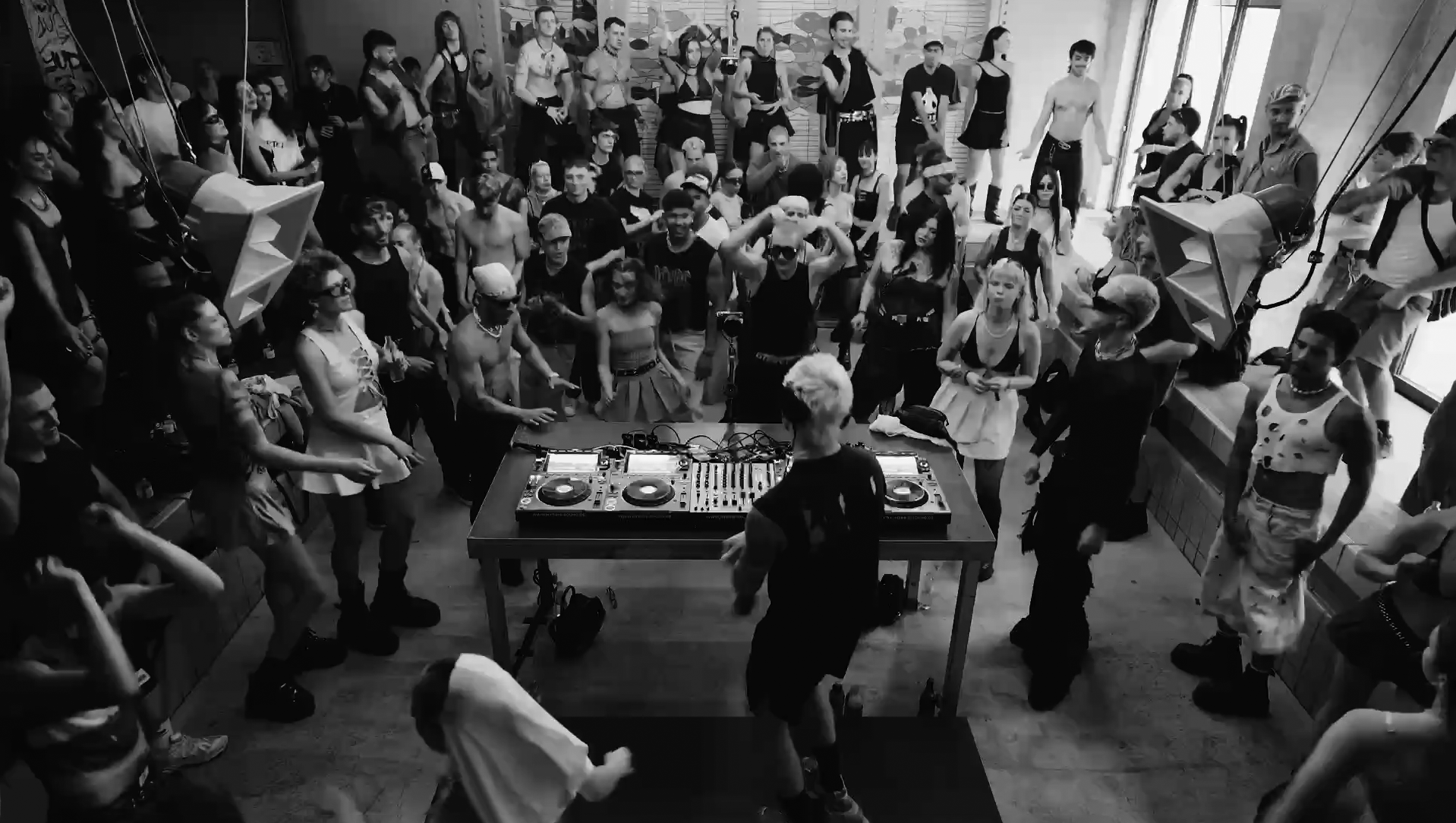
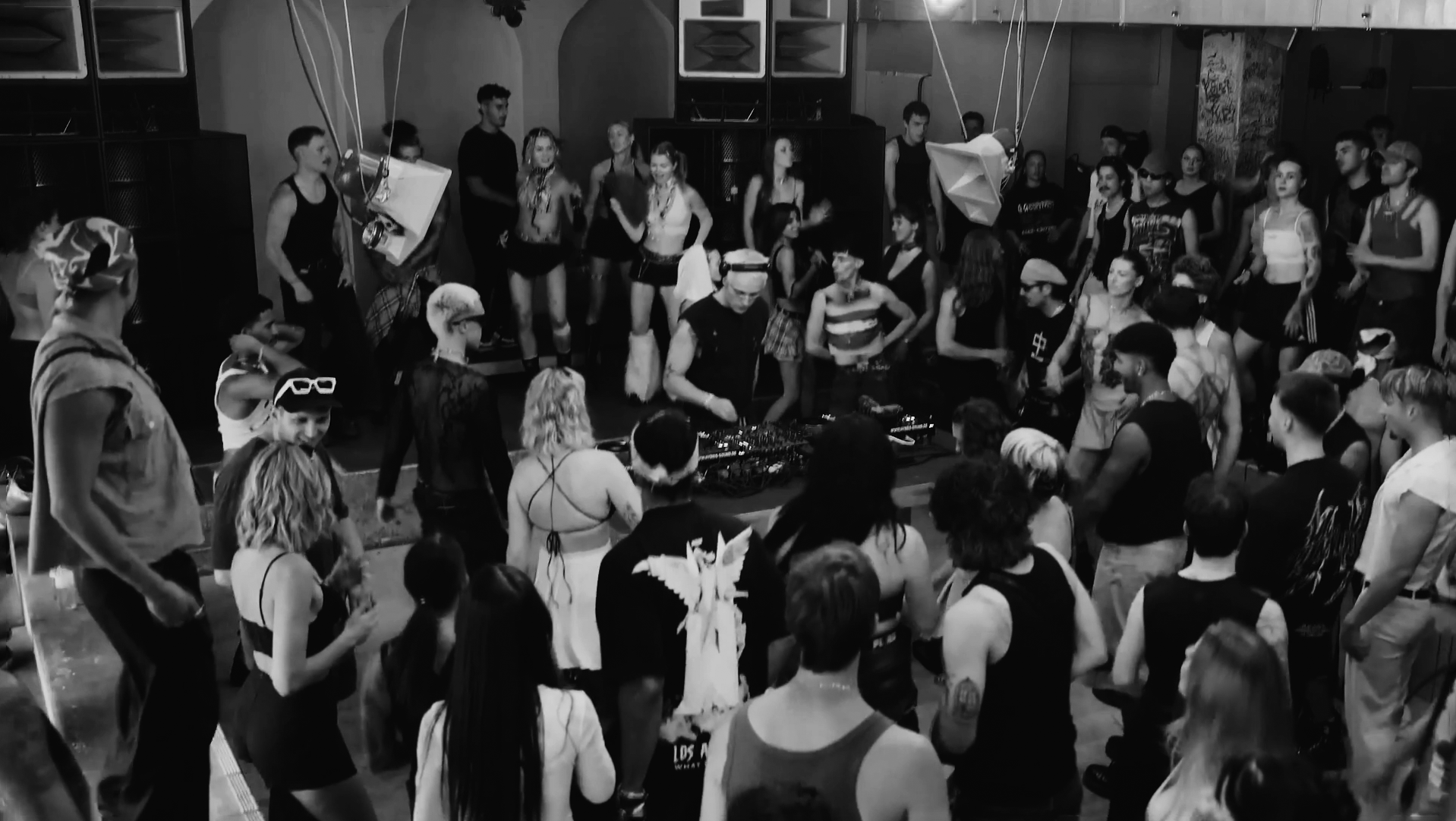
Clubbing culture, at its best, is a laboratory for social possibility. Confessions on a Dance Floor and Confessions II understood this: a levelling force, a shared heartbeat that dissolves hierarchies of taste, identity, and respectability. This is not really the purest and “most picky Berlin” techno scene that I deeply love, but the intimate confessions still create a space where pleasure and vulnerability coexist. The club becomes not escapism but radical openness. The bass-heavy production, the synthetic textures, the relentless rhythm all say the same thing: your body, your desire, your presence here matters. Two decades later, returning to this material is not nostalgia; it is an insistence that the liberatory potential of music remains urgent. The club, in these albums, is where openness becomes not an aspiration but a lived, breathing, sweating reality. This is one of the reasons I still today very much enjoy clubbing around the world. This is one of the reasons that I live in Berlin. It is to me a form of active concert listening. I, however, am not sure I would be thrilled if these two albums were actually played in a real club. I am more snobbish and picky, but the symbolic significance of these albums is then even stronger in this context.
Why you always make me feel so bad about myself?
Why you always make me wanna be like someone else?
I just wanna shut you down; why you gotta hang around?
It’s not okay, I don’t fuck with it
When I close my eyes
Everything is crystallized
No one wants to go outside
It’s not okay, it blows my mind
Typically, remixing involves preserving the original timeline and lyrics for understandable reasons. People are already familiar with the initial version, so there is no need to repeat it. I usually take the opposite approach and create a summary, then recreate everything from scratch to offer a completely new perspective. This is precisely what I have done with this remix. This also permits me to play with a more abstract compositional structure and meanings. It permits abstraction at the formal level. I can abandon conventional song structures (verse-chorus-bridge etc.), and instead compose in what I might call “electroacoustic” movements where ideas evolve organically rather than returning to familiar landmarks. It also permits me to do as Claude Debussy did for instance: a linear path with no coming back in the piece. More crucially, it allows meaning to mutate just a little. Its context is distorted: a line that once functioned as confession becomes incantation; a hook becomes a fragmented refrain that questions itself.
The video is unofficial, its initial sources are from klangkuenstler.